
RENT & RIDE JAPANJoshu & Mt. Myogi Foothills
Mt. Myogi Foothills & Tomioka Silk Mill Culture Ride
A culture-focused day trip from Hachioji into Gunma, riding the rugged foothills of Mt. Myogi to visit the Important Cultural Property Myogi Shrine and the UNESCO World Heritage Tomioka Silk Mill.
- DISTANCE
- 320 km
- DURATION
- 10 h
- LEVEL
- Intermediate
Leaving Hachioji, you take the Ken-O, Kan-Etsu and Joshin-Etsu Expressways straight up into Joshu (Gunma). Waiting for you are the jagged rock peaks of Mt. Myogi, counted among Japan's three most scenic rocky mountains. Riding the foothill roads beneath these strange crags, this route packs Gunma's proud culture and industrial heritage into a single day.
Highlights
- Myogi Shrine — Around 1,500 years of history; its lavish black-lacquered Gongen-style halls are a national Important Cultural Property and the heart of Mt. Myogi worship.
- Nakanotake Shrine — A power spot enshrining Todoro-iwa rock, home to a giant golden Daikoku deity.
- Myogi Panorama Park & Myogi Green Line — Winding roads with the rock peaks close at hand.
- Tomioka Silk Mill — Japan's first government silk-reeling mill (founded 1872), a UNESCO World Heritage Site with National Treasure buildings.
Riding Tips
The Myogi Green Line includes narrow, tightly curving sections; watch for fallen leaves and damp surfaces and keep a relaxed pace. With so much to see, plan backward from the 16:30 final entry at the Tomioka Silk Mill.
- 1START
Tashilog Garage
Start point. Depart Hachioji early and head to Gunma via the Ken-O, Kan-Etsu and Joshin-Etsu Expressways.
TIPSThe round trip is mostly expressway, so check fuel and gear before leaving. Aim to depart around 8:00.
- 2SPOT~60 min
Myogi Shrine
An ancient shrine on the eastern foot of Mt. Myogi's main peak, Mt. Hakuun, famed for its black-lacquered Gongen-style halls and vermilion main gate.
HISTORYSaid to date from 537, it enshrines deities including Yamato Takeru. In the Edo period the Tokugawa shoguns revered it as a guardian of Edo Castle's northwest direction. Its main hall, gates and other structures are national Important Cultural Properties, its carvings earning it the nickname 'the Nikko of Joshu.'
TIPSA steep 165-step stone stairway leads to the main hall. Parking at the Michi-no-Eki Myogi across the road is convenient (please confirm). Weeping cherries in spring and autumn foliage are spectacular.
Open in Google Maps
Photo: photo: Qurren (talk) Taken with Canon IXY 10S (Digital IXUS 210) / Wikimedia Commons / CC BY-SA 3.0 - 3FOOD~60 min
Michi-no-Eki Myogi (Myogi Bussan Center)
A roadside station at the foot of Mt. Hakuun opposite Myogi Shrine, whose eatery serves local soba, udon and maitake-mushroom dishes — the most reliable lunch stop on this route.
TIPSSignature items include local maitake-rice rice balls, miso oden and seasonal tempura set meals; the shop also sells Shimonita leeks and konnyaku. It gets busy at lunch, so you may sign in and wait for a table.
Open in Google Maps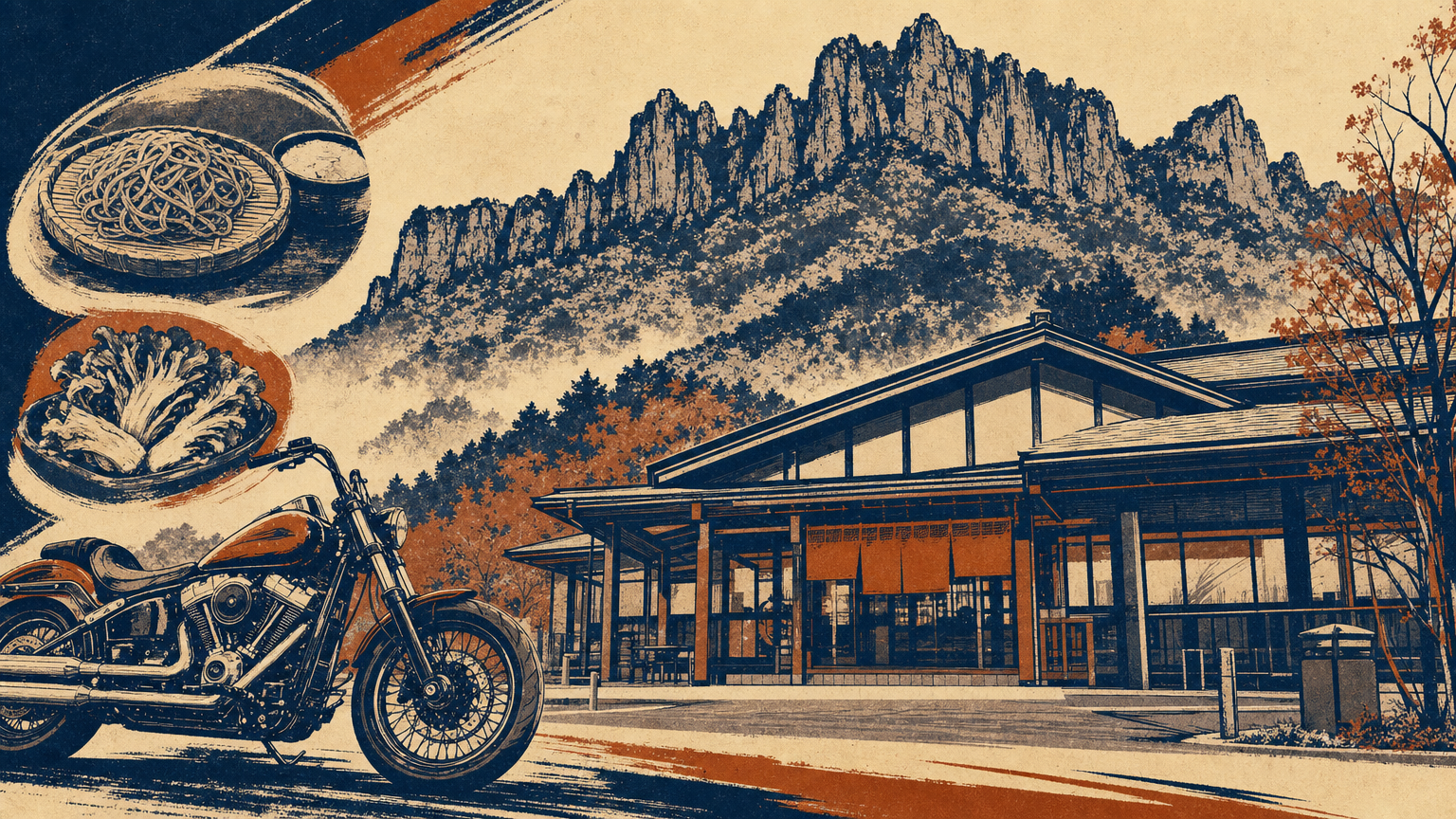
Image - 4VIEW~30 min
Myogi Green Line & Myogi Panorama Park area
A winding prefectural road tracing the foot of Mt. Myogi, offering close-up views of the jagged rock peaks — the riding highlight of this culture route.
TIPSSome sections are narrow with tight curves and fallen leaves. Ride slowly, and stop at open viewpoints to enjoy the rock-peak scenery.
Open in Google Maps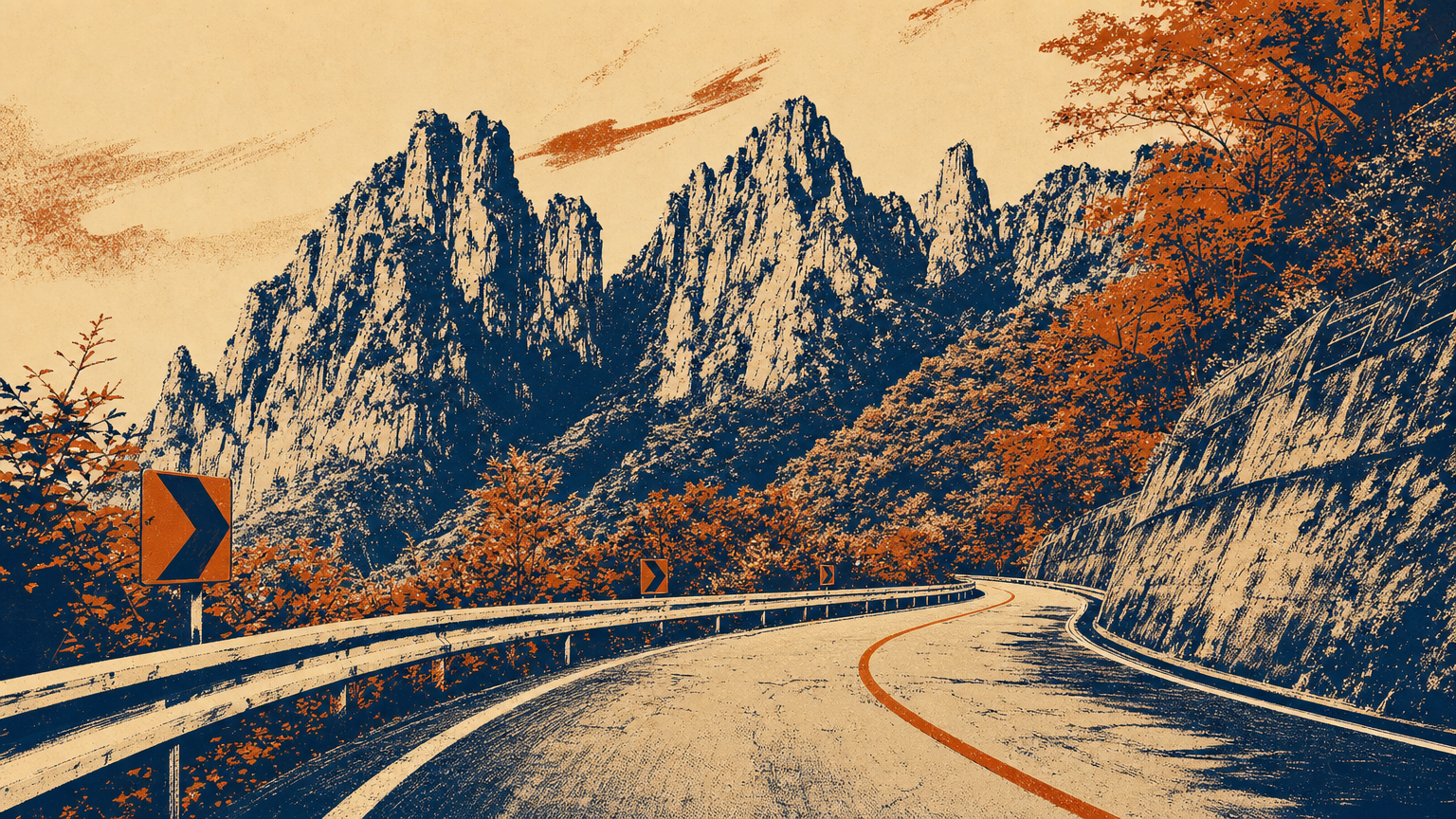
Image - 5SPOT~40 min
Nakanotake Shrine
An unusual shrine on the southern foot of Mt. Myogi that enshrines the Todoro-iwa rock, greeting visitors with Japan's largest golden Daikoku deity.
HISTORYSaid to date from 819 in the Heian period, it has no main hall — the towering Todoro-iwa rock behind it is the object of worship. The 20-metre, 8.5-tonne Daikoku statue holds a sword, said to sever bad ties and invite fortune.
TIPSA steep 145-step stairway leads to the hall, and the dramatic Todoro-iwa rock is a sight in itself. Paired with Myogi Shrine, it gives a full sense of Mt. Myogi worship.
Open in Google Maps
Photo: Yones / Wikimedia Commons / Public domain - 6SPOT~90 min
Tomioka Silk Mill
Japan's first full-scale government silk-reeling mill, founded in 1872, where the huge timber-framed brick buildings survive largely as they were at its founding.
HISTORYA model government mill that introduced Western technology and lifted Japan's silk industry to world-leading quality. Registered as a UNESCO World Heritage Site in 2014, three of its buildings — the reeling plant and the east and west cocoon warehouses — are National Treasures.
TIPSOpen 9:00–17:00 (last entry 16:30), adults 1,000 yen; allow 1–2 hours. There is no on-site parking, so use a nearby city lot.
Open in Google Maps
Photo: Hasec / Wikimedia Commons / Public domain - 7FOOD~25 min
Shinshuya (in front of Tomioka Silk Mill)
A local specialty shop right in front of the Tomioka Silk Mill, an easy spot for a snack or break after touring.
TIPSIts Joshu-style 'silk shumai' dumplings are a popular takeaway — ideal for a light bite after the mill tour. Please confirm hours and closing days in advance.
Open in Google Maps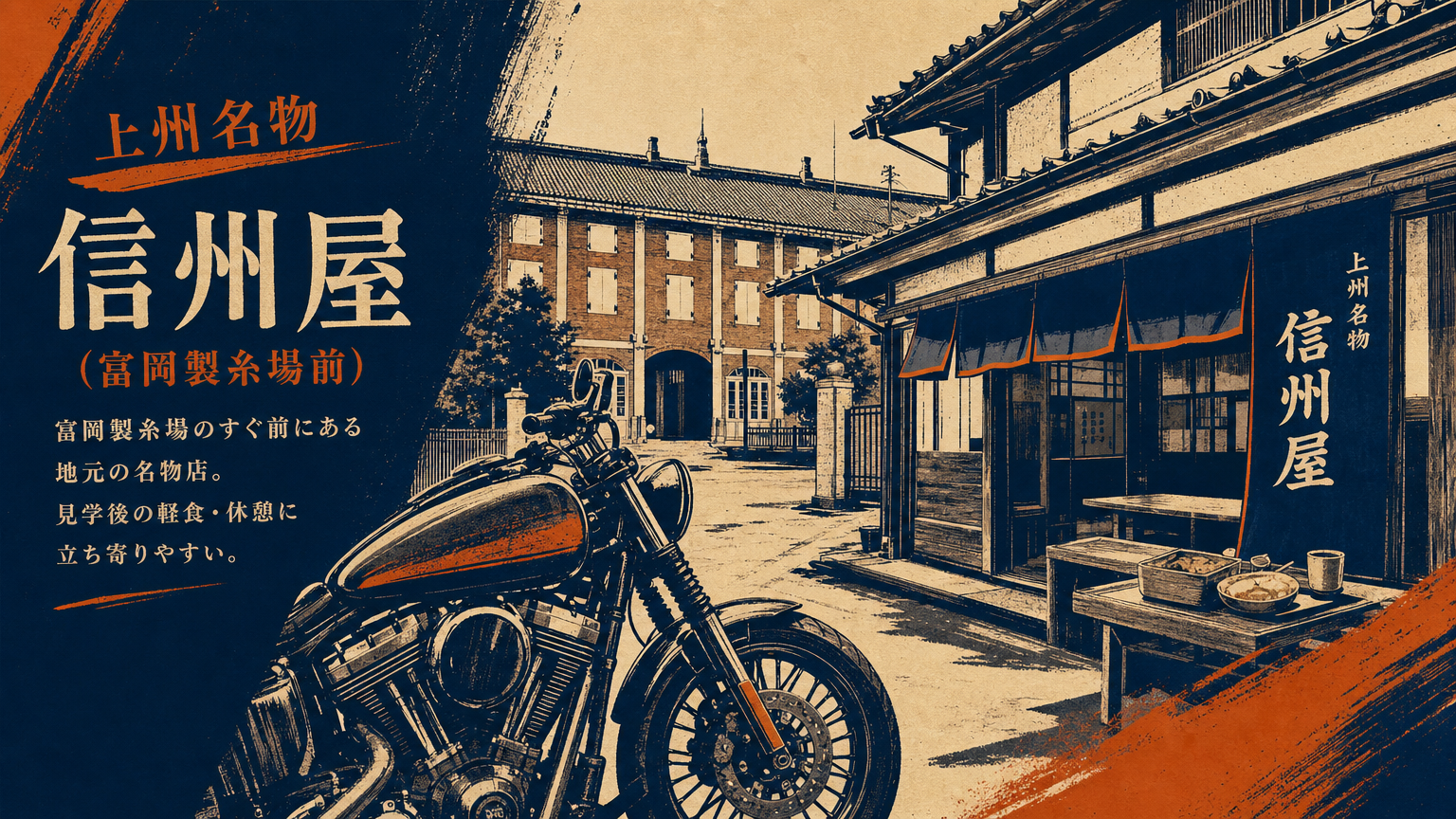
Image - 8GOAL
Tashilog Garage
Return. Head back to Hachioji via the Joshin-Etsu, Kan-Etsu and Ken-O Expressways.
TIPSThe Kan-Etsu Expressway can be congested in the evening, so allow extra time for the return.