
RENT & RIDE JAPANHitachi: North Kasumigaura to Southern Mt. Tsukuba
Kasumigaura Lake & Tsukuba Stone Country
A one-day culture ride north along Lake Kasumigaura, then into the stone country of Inada at the southern foot of Mt. Tsukuba, exploring ancient shrines and a historic granite quarry.
- DISTANCE
- 360 km
- DURATION
- 11 h
- LEVEL
- Intermediate
Starting from Tashilog Garage in Hachioji, cross the Kanto Plain into the Hitachi region of Ibaraki. Ride north along the wide lakeside roads of Kasumigaura, where water and sky seem to merge, then head into the stone country of Inada at the southern foot of Mt. Tsukuba for a day steeped in culture.
Highlights
- Kasumigaura lakeside roads — flat, open riding beside Japan's second-largest lake.
- Tsukuba-san Shrine — an ancient shrine of a sacred peak worshipped for some 3,000 years and protected by the Tokugawa shoguns.
- Ishikiri Sanmyaku (Inada quarry) — a historic quarry of "Inada stone" used in the National Diet Building and Tokyo Station, with a striking flooded pit known as the "lake not on any map."
- Ishi no Hyakunenkan — a small museum on Inada granite and the local stone industry.
Riding notes
This is a long one-day loop relying mainly on expressways. Watch for strong crosswinds along the lake and rest often. Since quarry viewing ends at 16:00, aim to arrive by early afternoon.
- 1START
Tashilog Garage
Start point (Hachioji)
TIPSStart early for this long day. Fuel up and check tire pressure before departing.
- 2VIEW~30 min
Kasumigaura Fureai Land (Namegata Lakeside)
A lakeside rest and viewing spot beside Kasumigaura Ohashi bridge, with sweeping views of the lake.
TIPSThe lakeside road is flat and open; beware of crosswinds on windy days. Enjoy lake views around the viewing tower.
Open in Google Maps
Image - 3SPOT~50 min
Tsukuba-san Shrine
An ancient shrine enshrining Mt. Tsukuba itself, with a vast precinct from the mid-slope worship hall up to the summit.
HISTORYAn ancient shrine venerating the sacred peak of Mt. Tsukuba, worshipped for some 3,000 years, with summit views reaching across the whole Kanto region. Tokugawa Ieyasu revered it as a guardian mountain for Edo Castle, and it received the protection of the shogunate; the present tower gate dates from an 1811 rebuilding.
TIPSAllow about 40 minutes. Don't miss the Tokugawa-era tower gate and sacred bridge; the approach has souvenir shops and eateries.
Open in Google Maps
Photo: Masao / Wikimedia Commons / CC BY-SA 4.0 - 4FOOD~60 min
Teuchi Soba-dokoro Nozawa
A handmade soba restaurant near Inada Station along Route 50, conveniently placed before or after the quarry visit.
TIPSKnown for thick, rustic soba made from locally grown Hitachi-aki buckwheat; the autumn-to-spring mushroom kenchin soba is a specialty. Closed Wednesdays; parking available.
Open in Google Maps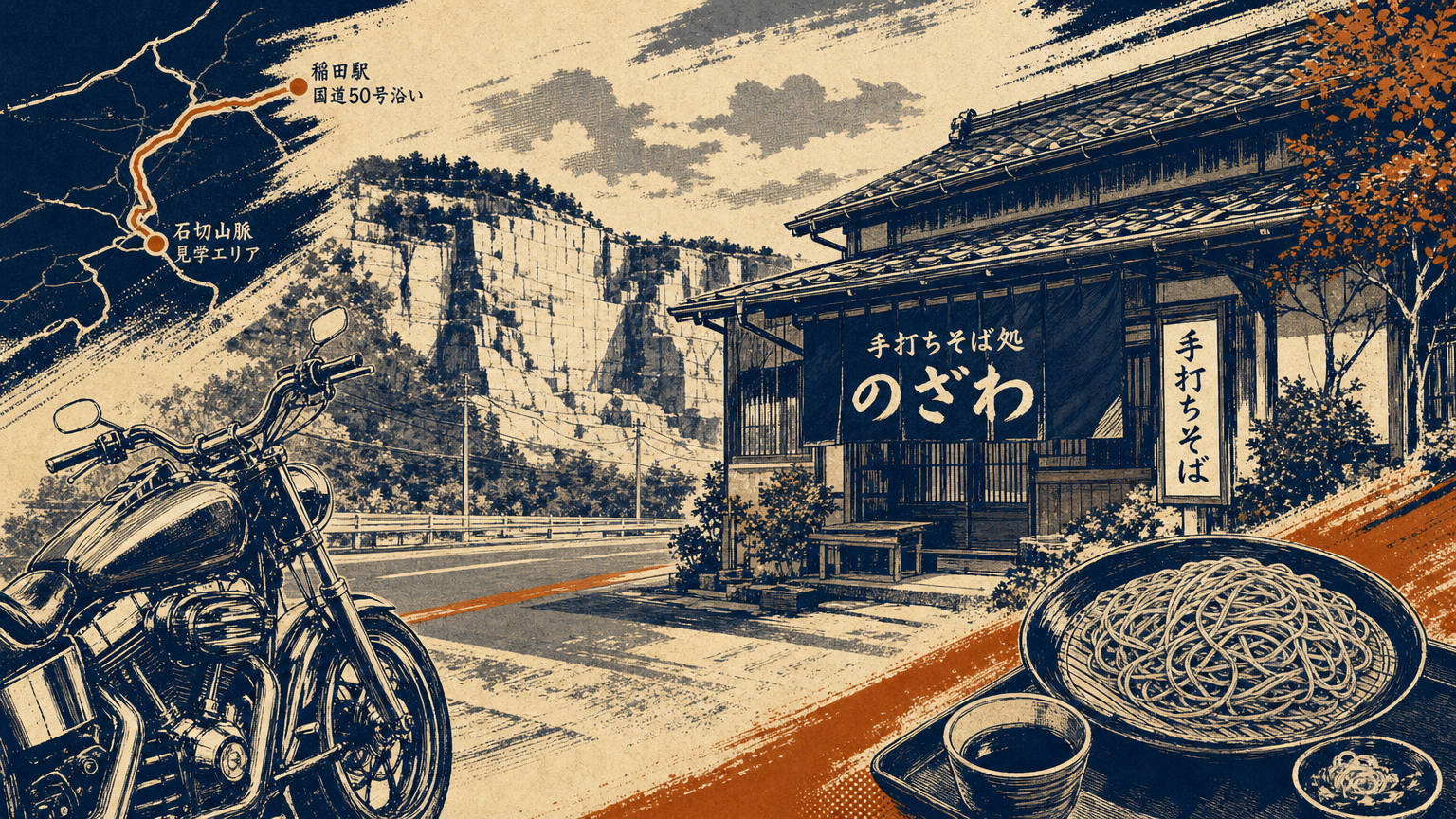
Image - 5VIEW~60 min
Ishikiri Sanmyaku (Inada Quarry)
One of Japan's largest Inada-granite quarries, worked for over a century since the Meiji era. The flooded former pit is known as the "lake not on any map."
HISTORYInada stone is a granite formed around 60 million years ago, prized for a whiteness that earned it the nickname "white lady." It was used in major Tokyo landmarks such as the Mitsui Main Building, the National Diet Building, and Tokyo Station, underpinning modern Japanese architecture.
TIPSViewing roughly 9:00–16:00 (shop 9:30–15:00); irregular closures. The on-site U-A Cafe serves a Mont Blanc on an Inada-stone plate. Arrive early as viewing ends at 16:00.
Open in Google Maps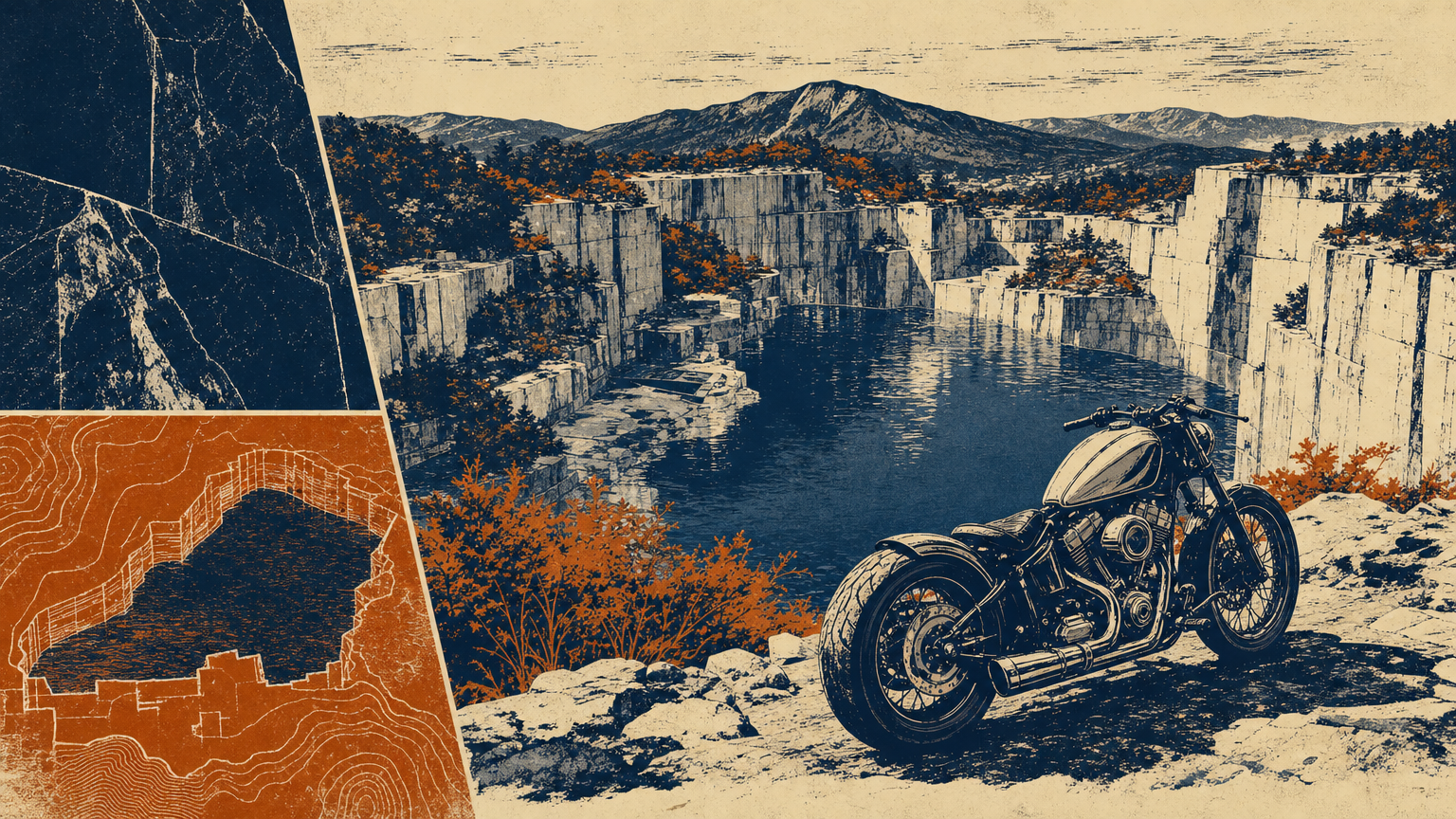
Image - 6SPOT~25 min
Ishi no Hyakunenkan (Stone Museum)
A museum adjoining JR Inada Station, with exhibits on Inada stone and the local stone industry.
TIPSLearning about Inada stone's history enriches the quarry visit. A quick stop; admission free.
Open in Google Maps
Photo: AT@wiki / Wikimedia Commons / CC BY-SA 2.0 - 7SPOT~40 min
Kasama Inari Shrine
An ancient shrine counted among Japan's three great Inari shrines, famous for seasonal events such as its chrysanthemum festival.
HISTORYAn Inari shrine long revered for prosperity in business and bountiful harvests, with an approach lined by long-established soba shops and souvenir stores.
TIPSA final stop before the ride home—stroll the approach and pick up souvenirs. Mind closing times in the evening.
Open in Google Maps
Photo: Dinakarr / Wikimedia Commons / CC BY-SA 3.0 - 8GOAL
Tashilog Garage
Return (Hachioji)
TIPSOn the way back, allow extra time for Joban Expressway and metropolitan congestion, especially in the evening.